Article
Speaking Anxiety in English: How to Gain Confidence Before Live 1-to-1 Lessons
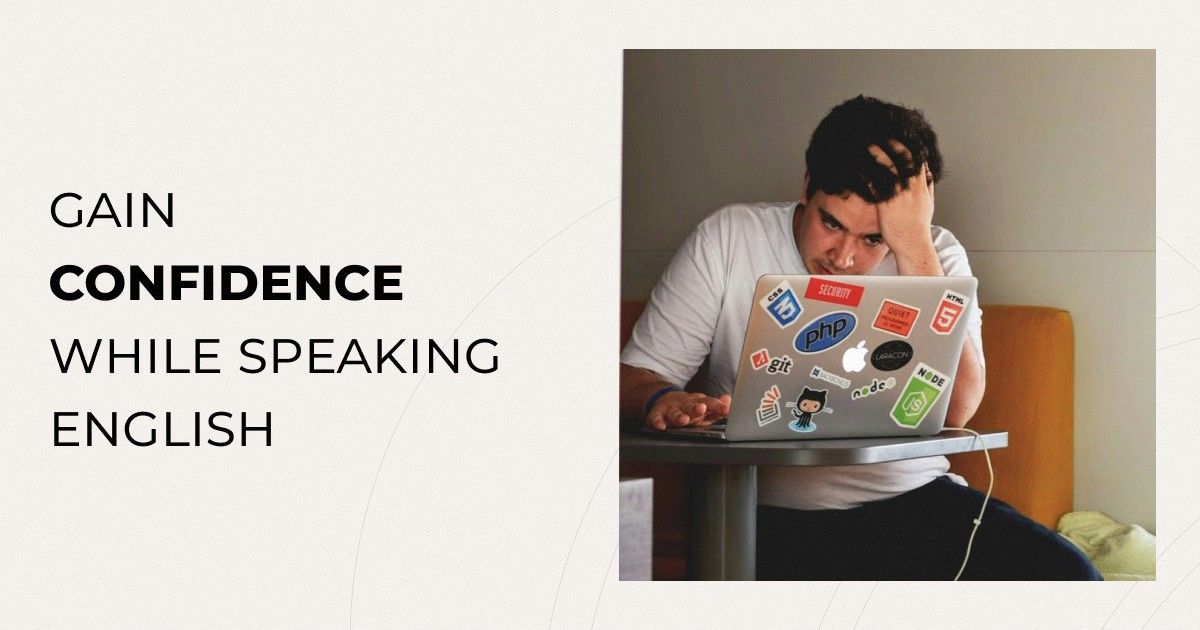
Your lesson starts in 15 minutes.
Your heart beats faster.
You open your video call platform, see your teacher’s face… and your brain suddenly goes blank.
If this sounds familiar, you’re not “bad at English”.
You’re experiencing speaking anxiety and it’s extremely common.
This guide explains:
- why 1-to-1 lessons feel so intense
- how anxiety affects your English
- simple routines to feel ready before class
- what to do during the lesson when panic appears
If you’d like to practise this in a safe, friendly environment with teachers who expect anxiety and know how to handle it, you can start with an online placement test at nwmoon.com.
Why Speaking English Feels So Much Harder Than Studying It
You can:
- understand your teacher
- follow YouTube videos
- do grammar exercises
…but in a live 1-to-1 lesson you suddenly:
- forget simple words
- speak much more slowly
- make mistakes you “know” are wrong
This happens because speaking in real time activates three pressures at once:
- Time pressure - you must answer now, not after 5 minutes.
- Social pressure - another human is listening and watching you.
- Perfection pressure - you want to sound “good enough” and not look stupid.
Your nervous system reacts as if you’re in danger.
The goal isn’t to delete anxiety (impossible) but to reduce it to a workable level and learn to speak with it.
What Speaking Anxiety Does to Your English
When you’re anxious, three things happen in your brain:
-
Working memory shrinks
- It becomes harder to hold vocabulary and grammar in your mind.
-
Self-monitoring becomes too strong
- You listen to yourself from the outside: “That sounded bad. That was wrong.”
-
Fight/flight responses appear
- Fight: you speak too fast, push too hard.
- Flight: you avoid speaking, give very short answers, or “freeze”.
Understanding this is important:
Your English is not as bad as it feels. Anxiety is stealing performance.
So we design strategies that:
- lower the anxiety level
- reduce overthinking
- give you small wins during the lesson
Step 1: Prepare “Just Enough” (Not Perfectly)
Most anxious students either:
- don’t prepare at all → feel lost, or
- over-prepare → write full scripts, memorise, then panic when things change
You need a middle way: light, smart preparation that supports you without trapping you.
Pre-Lesson Prep (10–15 Minutes)
Do this before each 1-to-1 session:
-
Write 3–5 key phrases you want to use
- “In my opinion…”
- “From my point of view…”
- “What I mean is…”
-
Note 3–5 topic words
- If the lesson theme is “work”, maybe: deadline, colleague, project, remote, flexible.
-
Prepare 1 question for your teacher
- “What do you think about…?”
- “Can you give me an example of…?”
You’re not scripting the whole lesson.
You’re giving your brain handles to grab when it feels empty.
nwmoon tip: after your placement test at nwmoon.com, your teacher can recommend the exact 3–5 phrases to prepare each week so prep stays simple and useful (not overwhelming).
Step 2: Calming Your Body (Before the Lesson)
Speaking anxiety is not only in your thoughts; it’s also in your body.
Common physical signals:
- tight chest
- fast breathing
- shaking hands
- dry mouth
You don’t need to be 100% calm. You just need to move from “panic” to “manageable”.
3-Minute Pre-Lesson Reset
-
Box breathing (1 minute)
- Breathe in for 4 seconds
- Hold for 4
- Out for 4
- Hold for 4
- Repeat 4 cycles
-
Relax your face and shoulders (1 minute)
- Drop your shoulders down
- Unclench your jaw
- Gently move your neck side to side
-
Voice warm-up (1 minute)
- Read 2–3 simple sentences out loud slowly
- Example: “Today I’m going to practise speaking. It’s okay to make mistakes.”
You’re sending your brain the message:
“We are safe. We can focus on communication.”
Step 3: Change the Story in Your Head
Anxious thoughts are usually automatic and extreme.
Common Anxious Thoughts vs Helpful Reframes
| Anxious Thought | More Helpful Reframe |
|---|---|
| “My English is terrible.” | “My English is in progress, that’s why I’m learning.” |
| “The teacher will judge me.” | “The teacher is paid to help, not to judge.” |
| “If I make mistakes, it’s a disaster.” | “Mistakes show the teacher what to help me with.” |
| “I must speak perfectly.” | “I must be understandable, not perfect.” |
| “I’m the worst student.” | “Everyone feels nervous; I’m not special or broken.” |
You don’t have to fully believe the new thought at first.
You just need to offer your brain an alternative.
Step 4: Use a Lesson “Safety Plan”
Go into every 1-to-1 session with a simple plan.
Your 5-Point Safety Plan
-
First sentence ready
- When the lesson starts, say something simple:
- “Hi, I feel a bit nervous today, but I’m happy to practise.”
- Naming nervousness often reduces it.
- When the lesson starts, say something simple:
-
Use your 3–5 chunks
- Keep your prepared phrases visible (on paper or screen).
- When you’re stuck, start with: “In my opinion…” or “The main thing is…”
-
Lower the difficulty
- If your brain freezes, say:
- “I don’t know how to say this exactly. I’ll try in a simple way.”
- Then use basic words; the teacher can help upgrade them.
- If your brain freezes, say:
-
Ask for micro-help, not full correction
- “If I repeat a mistake many times, please tell me one thing to fix.”
- This keeps feedback light and focused.
-
End with one win
- At the end, ask:
- “What is one thing I did well today?”
- “What is one thing I should focus on for next time?”
- At the end, ask:
This way, every lesson finishes with a clear success and one clear improvement point, not a vague bad feeling.
At nwmoon, teachers are trained to work like this after your placement test at nwmoon.com: one lesson → one key win → one clear focus for next time.
Step 5: Practise “Micro-Speaking” Between Lessons
Anxiety grows when the only speaking you do is during lessons.
You need small, low-pressure “micro-speaking” moments during the week to tell your brain:
“Speaking English is a normal thing I do, not a big exam.”
Micro-Speaking Ideas (2–5 Minutes)
-
Daily 60-second voice note
- Talk about one thing that happened today.
- Don’t stop or delete; just send it to yourself.
-
Mirror talk
- Speak to yourself in the mirror for 2 minutes.
- Use a simple prompt: “What did I do today?” or “What will I do tomorrow?”
-
Question of the day
- Pick one question (e.g., “What is your favourite place?”).
- Answer it aloud in 5–8 sentences.
-
Shadow + change
- Shadow 30–60 seconds of a video.
- Then say your own version of the message using easier words.
nwmoon angle (natural use): if you’re studying at nwmoon.com, your teacher can turn these into short weekly “between-lesson” tasks, so you don’t have to invent practice every day.
A 4-Week Plan to Reduce Speaking Anxiety
You don’t need to eliminate fear; you need to move from “paralysed” to “nervous but able to speak”.
Week 1 – Notice & Name
Goal: Understand your anxiety pattern.
- Before each lesson, rate anxiety from 1–10.
- After the lesson, write:
- 1 thing that made you nervous
- 1 thing that went better than you expected
Week 2 – Routine & Safety Plan
Goal: Arrive more prepared and calmer.
- Do the 3-minute pre-lesson reset before every session.
- Bring your 5-point safety plan and use at least one chunk per lesson.
Week 3 – Micro-Speaking
Goal: Make speaking feel more normal.
- Do 1–2 micro-speaking tasks (2–5 minutes) on non-lesson days.
- Keep everything low pressure: no deleting, no perfection.
Week 4 – Targeted Confidence
Goal: Focus on one difficult situation.
- Identify the moment that scares you most:
- starting the lesson
- answering unexpected questions
- giving your opinion
- Tell your teacher:
- “This part is hardest for me; can we practise it more but slowly?”
A good teacher will break the scary situation into small steps and repeat them with you until they feel easier.
If you want a teacher to guide this 4-week plan based on your level and personality, start with the placement test at nwmoon.com so your plan matches your real starting point.
What to Tell Your Teacher (So They Can Actually Help)
Sometimes teachers don’t see how anxious you are, especially online.
You can use simple sentences like:
- “I feel nervous when I speak. Please be patient if I’m slow.”
- “If my answer is too short, can you ask me more questions?”
- “I prefer one correction at the end, not every sentence.”
- “Today I’m tired; can we do easier speaking tasks?”
This is not complaining - it’s co-designing the lesson.
At nwmoon, we encourage students to say these things directly. After your test at nwmoon.com, your teacher can adapt the lesson style to your nervous system, not just your grammar level.
Quick Reference Table
| Problem | Practical Response You Can Use Today |
|---|---|
| Heart racing before lesson | Do the 3-minute pre-lesson reset |
| Brain goes blank at the start | Use a ready first sentence + 1 simple chunk |
| Fear of being judged | Remind yourself: “The teacher is here to help, not judge.” |
| Afraid of too many corrections | Ask for micro-feedback: “One thing to fix, please.” |
| Lessons feel like big exams | Add 2–5 minute micro-speaking on non-lesson days |
| Constant perfectionism | Focus on being understandable, not perfect |
Practice Exercises (Start Before Your Next Lesson)
Exercise 1 – Pre-Lesson Card
On a small paper or note app, write:
- 3 chunks you want to use
- 3 topic words you might need
- 1 question to ask your teacher
Look at this card just before your lesson.
Exercise 2 – Anxiety Scale & Reflection
After your next three lessons:
- Rate your anxiety before class (1–10).
- Rate your anxiety after class (1–10).
- Write:
- “One thing that helped me today was…”
- “Next time, I will try…”
You’re training your brain to notice progress, not only problems.
Exercise 3 – 5-Day Voice Note Challenge
For the next 5 days:
- Record a 60-second voice note in English each day.
- Don’t re-record or edit.
- At the end of day 5, listen to day 1 vs day 5 and note:
- 1 thing that sounds better
- 1 thing you want to improve in lessons
Bring those notes to your next 1-to-1 class and show your teacher.
Conclusion
Speaking anxiety in English doesn’t mean you’re weak or not talented. It means:
- you care about how you sound
- your brain is protecting you from “social danger”
- you’ve never been taught how to practise speaking with anxiety
When you:
- prepare just enough
- calm your body for a few minutes
- use a simple safety plan in lessons
- practise tiny speaking tasks between sessions
- and ask your teacher for micro-feedback, not perfection
your anxiety becomes manageable, and your real level starts to appear.
If you want a place where teachers expect nerves, build sessions around your psychology, and give you structured speaking routines between lessons, visit nwmoon.com. Take the placement test, see your level, and start a program that helps you speak more confidently, one lesson at a time.
You don’t have to be fearless to speak well.
You just need enough courage to show up, breathe, and say the next sentence.
Last modified: 30 Mar 2026